Yarn:A yarn is an assembly of fibres that are laid or twisted together to form continuous strand.
II. Combed yarn.
III. Semi-combed yarn.
Carded or Karded yarn: It is an inferior quality of yarn. In processing this yarn, no comber is used. It contains more short fibres and naps.The process flowchart of carded yarn is as follows:

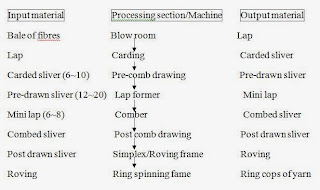
Combed yarn: It is a superior quality of yarn. In manufacturing combed yarn comber is used. So this yarn contains almost no naps or short fibres.The process flowchart of combed yarn is as follows:
Semi combed yarn: It is a medium quality of yarn. It is manufactured by mixing some combed slivers. For example, 50% combed sliver means if there are 8 slivers 4 carded and 4 combed slivers are mixed at post comb draw frame to produce this type of yarn.The process flow chart is as follow:

Yarns may be made from either staple fibres or filament fibres. Staple fibres are twisted into yarns, filament fibres need little or no twist to hold them together in yarn.
Classification of yarns on the basis of processing:
I. Carded or Karded yarn. II. Combed yarn.
III. Semi-combed yarn.
Carded or Karded yarn: It is an inferior quality of yarn. In processing this yarn, no comber is used. It contains more short fibres and naps.The process flowchart of carded yarn is as follows:

Combed yarn: It is a superior quality of yarn. In manufacturing combed yarn comber is used. So this yarn contains almost no naps or short fibres.The process flowchart of combed yarn is as follows:

Semi combed yarn: It is a medium quality of yarn. It is manufactured by mixing some combed slivers. For example, 50% combed sliver means if there are 8 slivers 4 carded and 4 combed slivers are mixed at post comb draw frame to produce this type of yarn.The process flow chart is as follow:


